
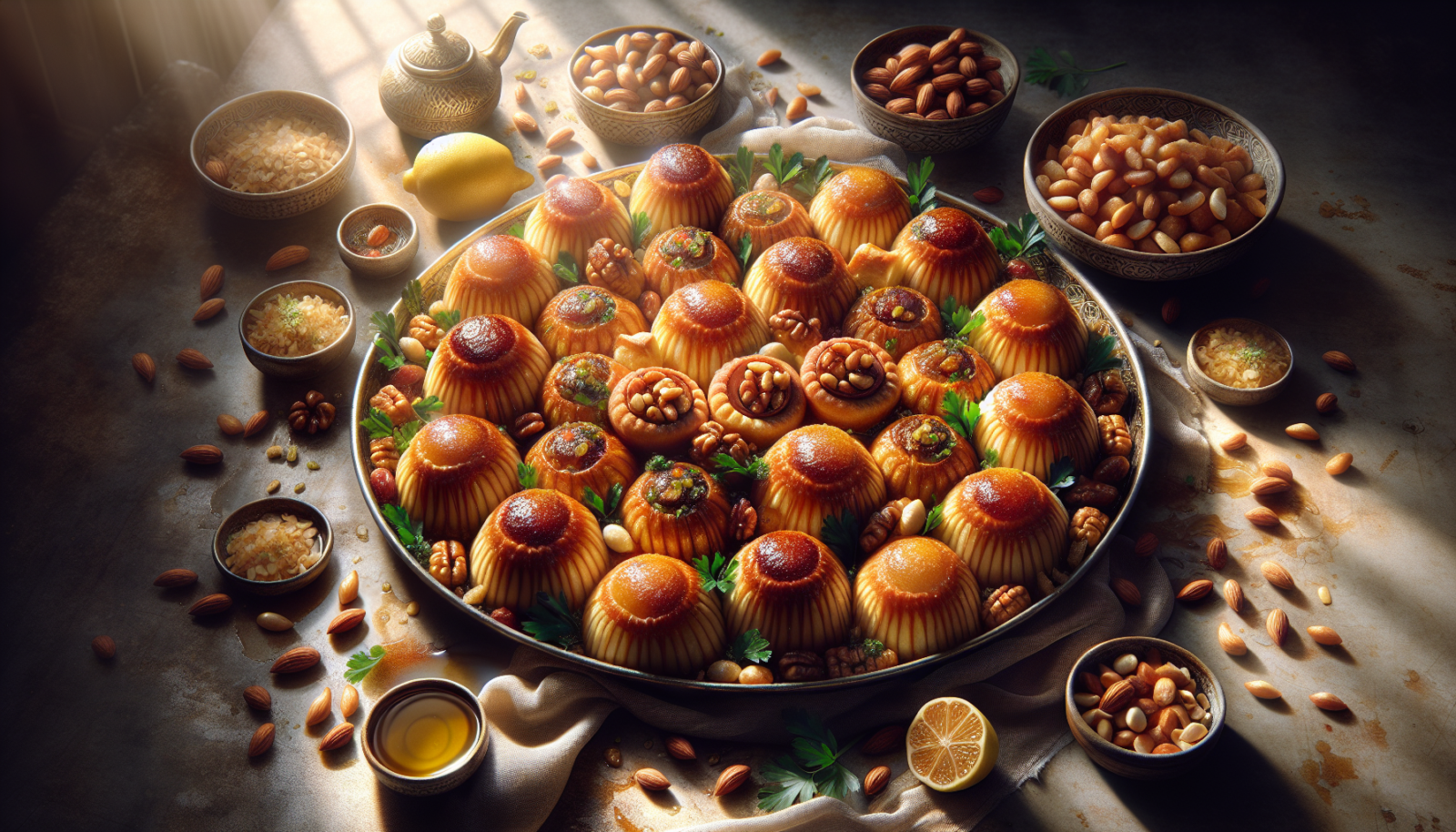
In the heart of every Palestinian gathering, the sweet aroma of freshly baked pastries fills the air, inviting everyone to indulge in a delightful treat. One such beloved creation is the layered nut pastry, known locally as ‘باقلاوة’ (Baklawa). This exquisite dessert, characterized by its delicate layers of phyllo dough and rich nut filling, is often enjoyed during special occasions, family gatherings, and festive celebrations. The crunch of the pastry, paired with the sticky sweetness of honey syrup, creates a symphony of textures and flavors that captivates the senses, evoking memories of home and hospitality.
The origins of this delectable pastry can be traced back centuries, with influences from various cultures that have inhabited the region. While baklava is enjoyed across the Middle East and Mediterranean, each country has its unique twist on the recipe. In Palestine, baklava holds a significant place in culinary traditions, often prepared during Eid celebrations, weddings, and other joyful occasions. Its preparation is a labor of love, passed down through generations, symbolizing generosity and togetherness.
What sets this Palestinian layered nut pastry apart is not just its ingredients but also the method of preparation. The combination of walnuts and almonds provides a rich flavor profile, while the addition of cinnamon adds warmth and depth. The meticulous layering of phyllo dough, brushed with melted butter, creates a flaky exterior that contrasts beautifully with the moist, nutty filling. The final touch—a generous drizzle of aromatic syrup—transforms this pastry into a true indulgence.
The Must-Do’s
To ensure the authenticity of this dish, it’s crucial to follow several key steps. First, make sure to use high-quality phyllo dough, as it is the foundation of the pastry’s texture. Layering should be done carefully, with each sheet brushed with butter to achieve that signature flakiness. Additionally, allowing the syrup to soak into the baklava after baking is essential for enhancing its flavor and moisture.
Pro Tips
For an elevated flavor experience, consider adding a touch of cardamom to the nut filling or experimenting with different nut combinations. If you’re short on time, store-bought phyllo dough can save hours of preparation. However, avoid over-baking, as this can lead to a dry pastry. For optimal results, serve the baklava at room temperature, allowing the flavors to meld beautifully.
Serving Suggestions
This layered nut pastry is best enjoyed with a cup of strong Arabic coffee or fragrant mint tea. Consider presenting it alongside fresh fruits or a light yogurt dip to balance the sweetness.
Garnishing & Presentation
Traditionally, baklava is garnished with finely chopped pistachios or a dusting of powdered sugar. To enhance the visual appeal, arrange the pieces on a decorative platter, allowing the golden layers to shine. A drizzle of syrup over the top not only adds flavor but also creates a beautiful sheen.
الخبز في بيتنا، والملح في قلوبنا.
This translates to ‘Bread is in our house, and salt is in our hearts.’ It signifies the importance of food in bringing people together and the warmth of hospitality, much like the cherished moments shared over a plate of baklava.
As a child, I remember my grandmother meticulously preparing baklava every Eid. The kitchen would be filled with laughter, stories, and the sweet scent of syrup. Each piece was a labor of love, and sharing them with family brought immense joy. This recipe is not just about satisfying a sweet tooth; it’s about preserving traditions and celebrating the bonds that unite us.
Equipment Needed
- large baking dish
- mixing bowl
- sharp knife
- saucepan
- brush
Cooking Techniques
Layering
This technique involves stacking thin sheets of phyllo dough with butter in between, creating a flaky texture.
Baking
Baking the layered pastry until golden brown ensures a crispy exterior that contrasts with the sweet, tender interior.
Serving Suggestions
- Serve with a cup of Arabic coffee or mint tea.
Garnish Suggestions
- Chop some pistachios and sprinkle them on top for added color and flavor.