
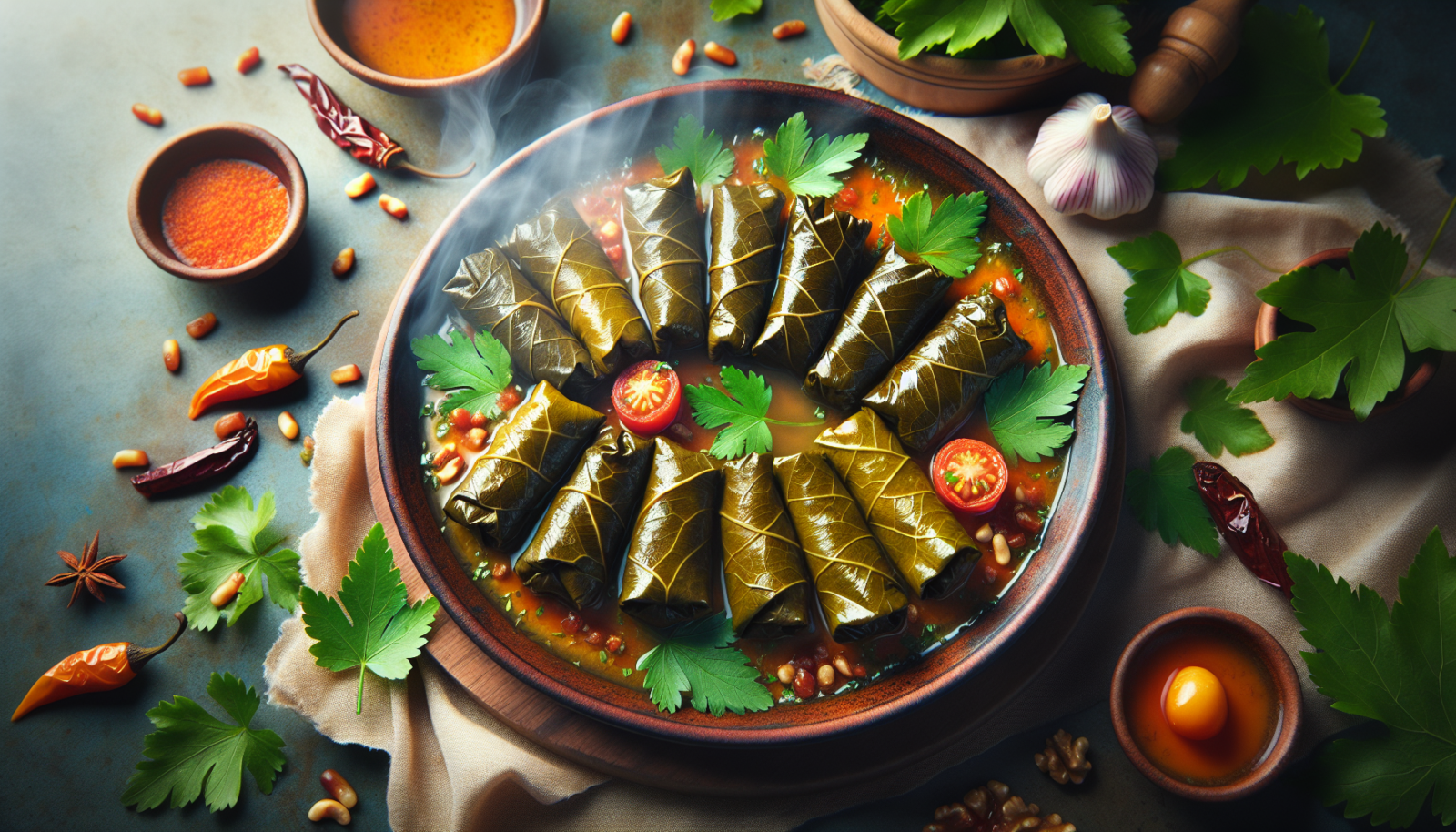
Stuffed grape leaves, known as ورق عنب (Waraq Enab) in Arabic, are a beloved staple in Palestinian cuisine. These delicate rolls of vine leaves encase a fragrant filling of rice, herbs, and often meat, simmered slowly to absorb the tangy notes of lemon and spices. The aroma wafting through the kitchen as they cook evokes a sense of home and tradition, making them a centerpiece at family gatherings and festive occasions. Each bite reveals a burst of flavors—earthy, aromatic, and refreshing—capturing the essence of the Mediterranean.
The tradition of stuffing grape leaves dates back centuries, with roots in ancient Mediterranean cultures. In Palestine, this dish is more than just food; it’s a symbol of hospitality and community. Families often gather to prepare these rolls together, sharing stories and laughter as they work. Over time, regional variations have emerged, with some adding different spices or ingredients, but the core method remains cherished across generations.
What sets Palestinian stuffed grape leaves apart is the freshness of the ingredients and the balance of flavors. The use of fresh herbs like parsley and mint adds a vibrant note, while the optional inclusion of meat provides a hearty contrast. The slow cooking process allows the flavors to meld beautifully, creating a dish that is both comforting and sophisticated.
The Must-Do’s
To achieve authentic stuffed grape leaves, it’s crucial to use fresh, tender grape leaves, ideally harvested in the spring. Rinsing the leaves thoroughly helps eliminate excess saltiness from pickled varieties. When rolling, ensure the filling is not overstuffed to allow for even cooking. Lastly, placing a plate on top during cooking keeps the rolls submerged, ensuring they absorb the flavorful broth.
Pro Tips
For an extra layer of flavor, consider adding a pinch of cinnamon or a splash of pomegranate molasses to the filling. If you’re vegetarian, substitute the meat with chickpeas or lentils for added protein. Avoid overcooking the leaves, as they can become mushy; aim for a tender yet firm texture.
Serving Suggestions
These delightful rolls are best served warm or at room temperature, accompanied by a side of tangy yogurt or tahini sauce. A simple salad of tomatoes and cucumbers adds a refreshing crunch, balancing the richness of the dish.
Garnishing & Presentation
For a beautiful presentation, garnish your stuffed grape leaves with fresh lemon wedges and a sprinkle of chopped parsley. Arranging them neatly on a platter enhances their visual appeal and invites guests to enjoy.
الطعام الذي يتشاركه الناس هو طعام يحمل الحب
Translated, this means ‘Food shared among people carries love.’ This proverb highlights the importance of sharing meals, particularly dishes like stuffed grape leaves, which bring families and friends together.
Growing up in a Palestinian household, stuffed grape leaves were a staple at every family gathering. I remember my grandmother’s hands deftly rolling each leaf, her laughter echoing through the kitchen. This dish embodies our traditions and memories, a testament to the love and care that goes into preparing food for those we cherish. It’s a recipe that has been passed down through generations, each roll telling a story of home and heritage.
Equipment Needed
- Large bowl
- Skillet
- Large pot
- Heavy plate
- Measuring cups and spoons
Cooking Techniques
Sautéing
Cooking food quickly in a small amount of oil or fat over high heat.
Simmering
Cooking food gently in liquid just below boiling point.
Rolling
Wrapping filling in leaves to create a compact and flavorful dish.
Serving Suggestions
- Serve with yogurt or tahini sauce for dipping.
- Pair with a fresh salad or pita bread.
Garnish Suggestions
- Garnish with fresh lemon slices and chopped parsley.