
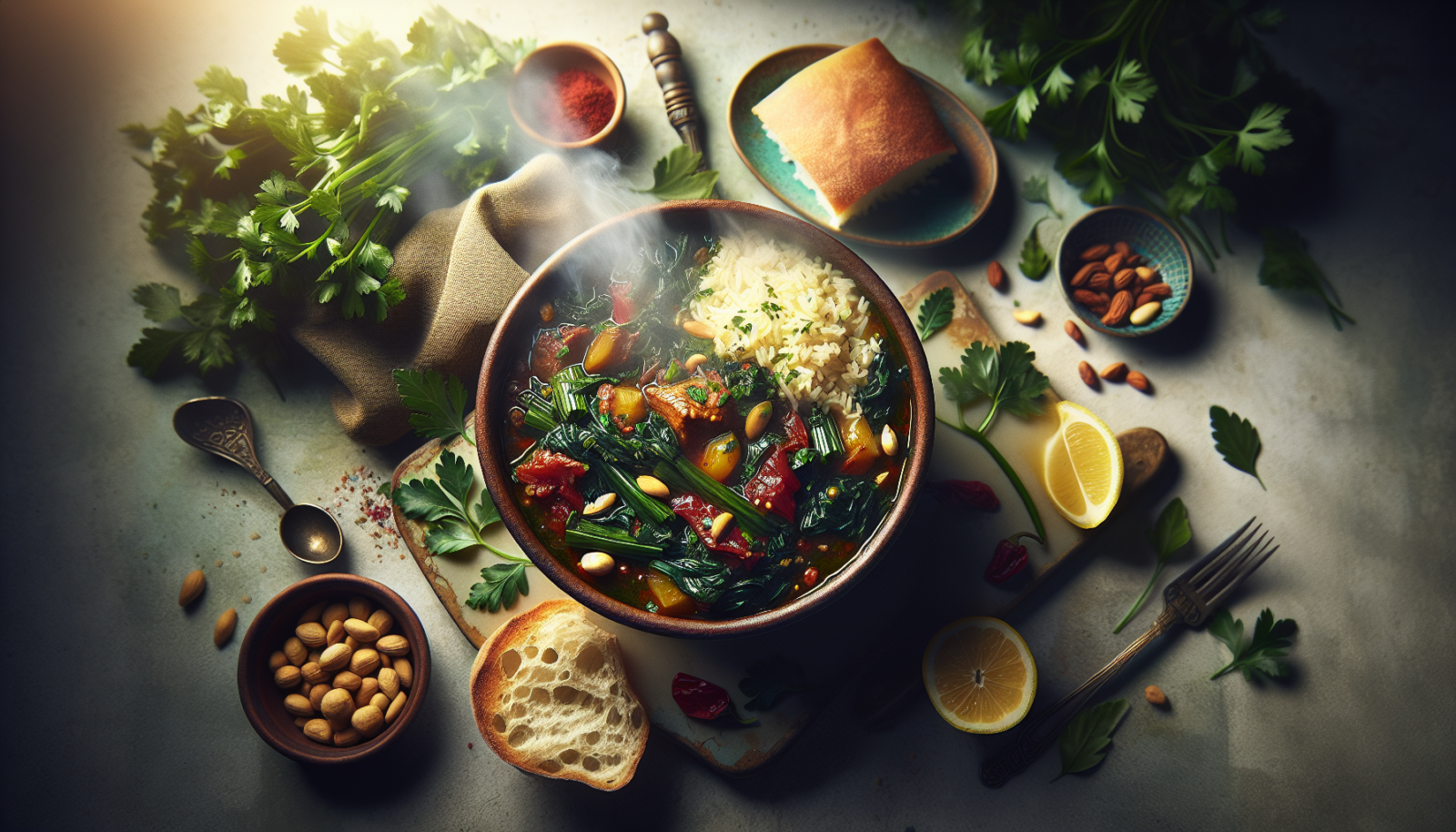
Gaza’s sumac and chard stew is a vibrant celebration of flavors that embodies the spirit of Palestinian cuisine. This unique dish combines the tangy notes of sumac with the earthy richness of tahini and the wholesome goodness of chard leaves. It’s a staple in many Palestinian households, often enjoyed during family gatherings or special occasions. The aroma of simmering chard and spices fills the kitchen, inviting everyone to the table. Each spoonful offers a delightful balance of textures and tastes, making it not just a meal but a cherished experience.
Sumac and chard stew, or ‘مغربية السلق’, has its roots deeply embedded in Palestinian culinary traditions. Chard, a leafy green vegetable, has been cultivated in the region for centuries, prized for its nutritional value and versatility. Sumac, a spice derived from the dried berries of the sumac tree, adds a distinctive tartness that enhances the dish’s overall flavor profile. Historically, this stew was a way to utilize seasonal greens and pantry staples, reflecting the resourcefulness of Palestinian cooks. Over time, it has evolved into a beloved dish, symbolizing comfort and home.
What sets Gaza’s sumac and chard stew apart is its harmonious blend of flavors and textures. The use of tahini not only enriches the stew but also provides a creamy consistency that contrasts beautifully with the tender chard leaves. The addition of sumac introduces a bright acidity that elevates the dish, making it both refreshing and satisfying. Unlike other stews that may rely heavily on meat, this vegetarian delight showcases the natural flavors of its ingredients, making it a favorite among plant-based eaters.
The Must-Do’s
To ensure the authenticity of this dish, it’s crucial to follow a few key steps. First, sautéing the onions and garlic until they are golden enhances their sweetness and depth of flavor. Next, adding sumac at this stage allows it to bloom, releasing its essential oils. When incorporating the tahini, mix it with lemon juice beforehand to achieve a smooth sauce that blends seamlessly into the stew. Finally, simmering the dish allows the flavors to meld together, creating a rich and satisfying stew.
Pro Tips
For an elevated version of this stew, consider adding roasted chickpeas for added protein and texture. If you prefer a spicier kick, include a pinch of cayenne pepper or some diced chili along with the onions. To enhance the flavor further, use homemade vegetable broth instead of store-bought. Common mistakes to avoid include overcooking the chard, which can lead to a mushy texture, and neglecting to taste and adjust the seasoning as needed.
Serving Suggestions
This stew is best served warm, accompanied by warm pita bread or over a bed of fluffy rice. For a complete meal, pair it with a side salad of fresh tomatoes, cucumbers, and herbs drizzled with olive oil and lemon juice. A dollop of yogurt can also add a creamy contrast to the tangy stew.
Garnishing & Presentation
Garnishing the stew with a sprinkle of fresh parsley not only adds a pop of color but also freshness to each bite. A drizzle of high-quality olive oil just before serving enhances the flavors, while lemon wedges on the side allow guests to customize their tanginess. Serve in rustic bowls to evoke a sense of warmth and homeliness.
الخبز والملح لا ينفصلان عن بعضهما البعض.
This traditional Palestinian saying translates to ‘Bread and salt cannot be separated from one another.’ It signifies the importance of sharing food and hospitality in Palestinian culture, especially when serving dishes like this stew that bring families together.
As I reflect on my childhood, I remember the comforting aroma of this stew wafting through my grandmother’s kitchen. Each family gathering was marked by laughter and stories shared over hearty bowls of sumac and chard stew. This dish is more than just a recipe; it represents love, tradition, and the joy of coming together. I hope you enjoy making and sharing it as much as my family does.
Equipment Needed
- large pot
- cutting board
- knife
- measuring cups
- measuring spoons
- mixing bowl
Cooking Techniques
Sautéing
A method of cooking that involves cooking food quickly in a small amount of oil or fat over relatively high heat.
Simmering
Cooking food gently in liquid just below the boiling point, allowing flavors to develop without losing moisture.
Serving Suggestions
- Serve with warm pita bread or over a bed of rice.
- Pair with a side of pickled vegetables for added flavor.
Garnish Suggestions
- Top with a drizzle of olive oil and a sprinkle of additional sumac.
- Garnish with lemon wedges on the side for an extra zesty kick.